On P List of Movie Reviews
(For optimum viewing, adjust the zoom level of your browser to 125%.)
A Patch of Blue (1965)
Rate:
8
Viewed:
2/17
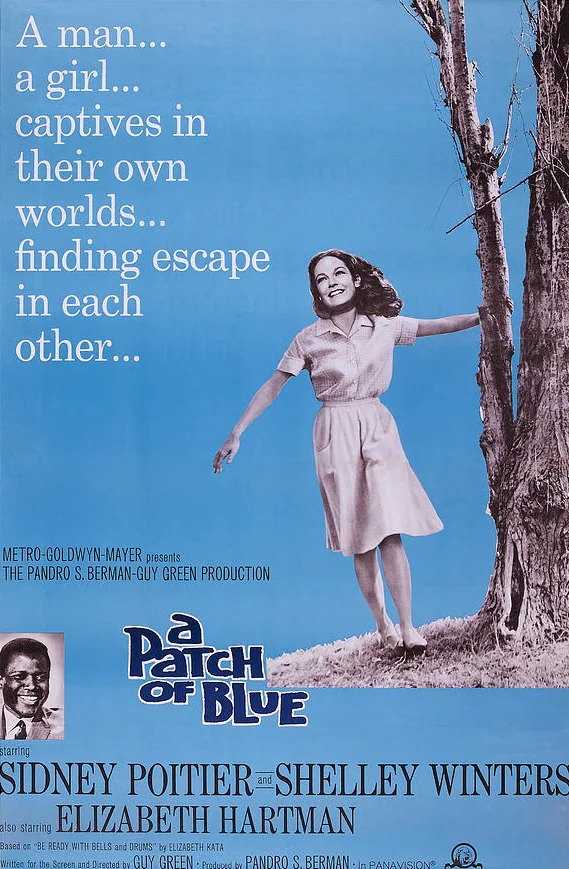
2/17:
A Patch of Blue is almost a cross between
The Heart Is a Lonely Hunter and
The Miracle Worker.
The true star of the show is Elizabeth Hartman who plays an uneducated blind girl falling in love with a
black man and therefore is Oscar-nominated in a debuting role. She displays the correct emotions every single
step of the way, and how she felt after being shown the light by her male friend is very much genuine.
For her character, Elizabeth Hartman wore a pair of opaque contact lenses to make herself truly blind. In short,
it's a great acting performance. Sadly, the actress committed suicide by jumping out of her apartment five
stories high when she was 43 due to depression after suffering from mental illness for many years.
Once again, Sidney Poitier is fantastic. Appearing in many important pictures, he has made his mark as a fine
actor, turning in strong performances that are timeless. It's easy to identify with Sidney Poitier's character
because he's a universal representation of the audience.
1965 was a weak year for the Oscars which meant Shelley Winters won the award for Best Supporting role. It's
nothing special; just a typical, melodramatic performance. Perhaps the voters seeing her this way was shocking
for them, so they must have liked the change of scenery or maybe they loved her trashy blond hair and tight
clothes that accentuated her big boobs.
Anyway, I have to raise a slight objection of how things went down during the ending. The blind girl was madly
in love with her male companion. But he didn't see it that way, hence the peck kiss on her forehead, while
feeling the girl to be clingy and needy. So, as a way out, he decided to call the school for the blind to take
her away.
At the end, he came out looking noble and feeling like he did a good deed because it's all about saving the girl
from an abusive home which, sad to say, happens quite often to people with severe disabilities. To soften the
blow for her in terms of marriage, he said she should wait a year to see where they stand. But really, he's
only getting rid of her. One interpretation of this is she should meet many people to expand her horizons and
then see if she still feels the same about him.
Why I don't like the ending, which is open-ended and a repeat of what happened to Blanche DuBois, is what if
the blind girl didn't ask to be saved? I mean, is it Gordon Ralfe's right to have her taken away because he
thinks it's the most appropriate thing to do? Maybe he should let her make the decision? Overall, it seems to be
done out of pity, and a sainthood should be granted to him.
Honestly, I don't view A Patch of Blue as a picture about interracial relationships or "love is color
blind." That's ridiculous and irrelevant, and I don't care if it's 1965. On the other hand, I couldn't tell
where the film took place which does make a big difference. It seemed the South, but the attitudes and the
setting made it look somewhere in New York City. But the whole thing was shot on location in Los Angeles.
All in all, A Patch of Blue is a great film, but the ending is sanctimonious at best and insulting
at worst.